Getting Started: Avoid Wasting Early Runs
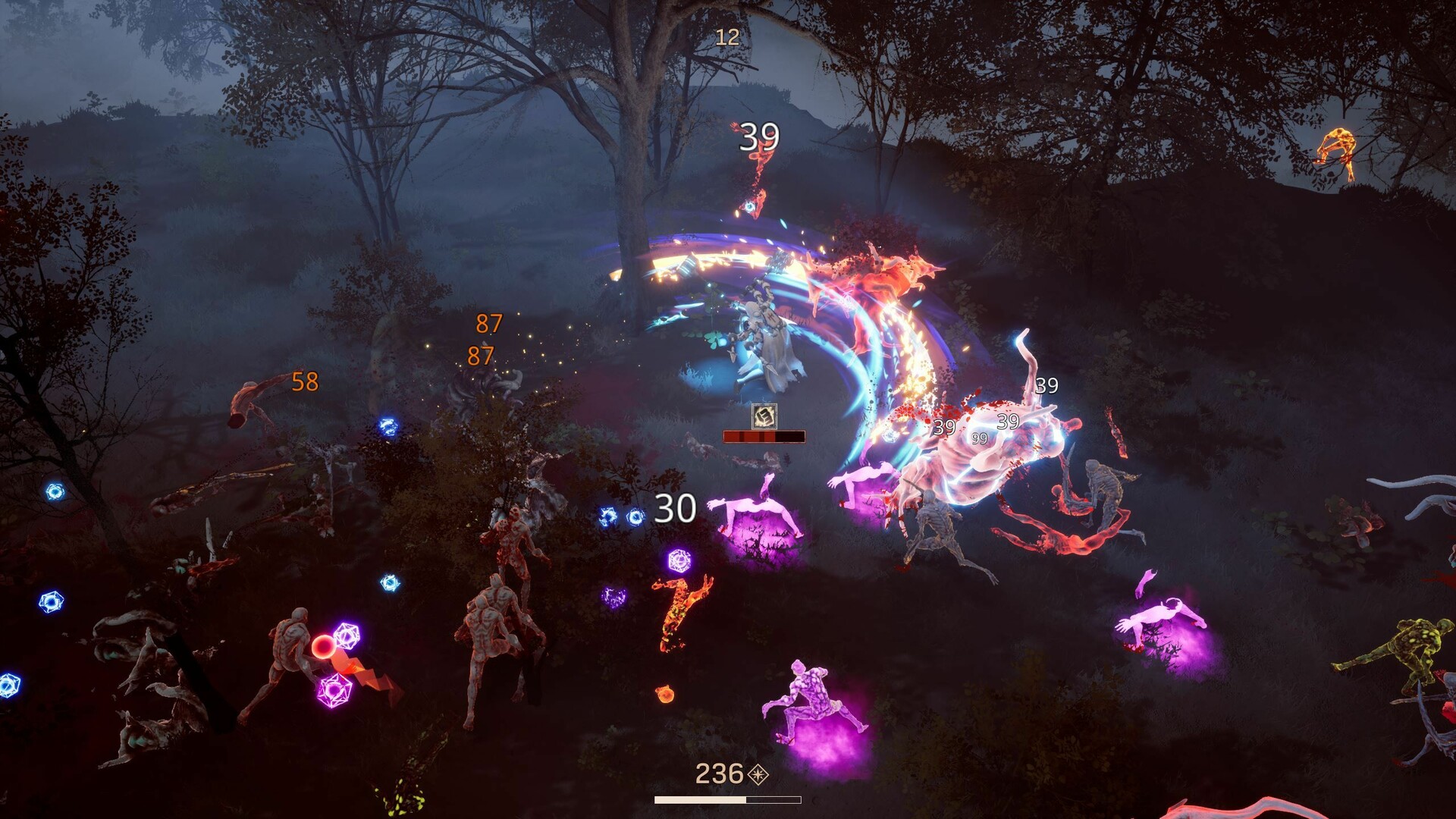
I ran straight into the first boss with the default loadout and died in about 12 seconds. Tried again with a different character, died in 15. The game doesn't tell you much about how weapon merging actually works, so I burned through three runs before I figured out you can sacrifice weapons to transfer their stats. Don't be me.
And look, this isn't one of those guides where I pretend to have everything figured out. I've got about 50 hours in the game at this point and I still discover new blessing synergies every few runs. The depth is real. Let me walk you through what I wish someone had told me on day one.
Pick the Right Character for Your Playstyle
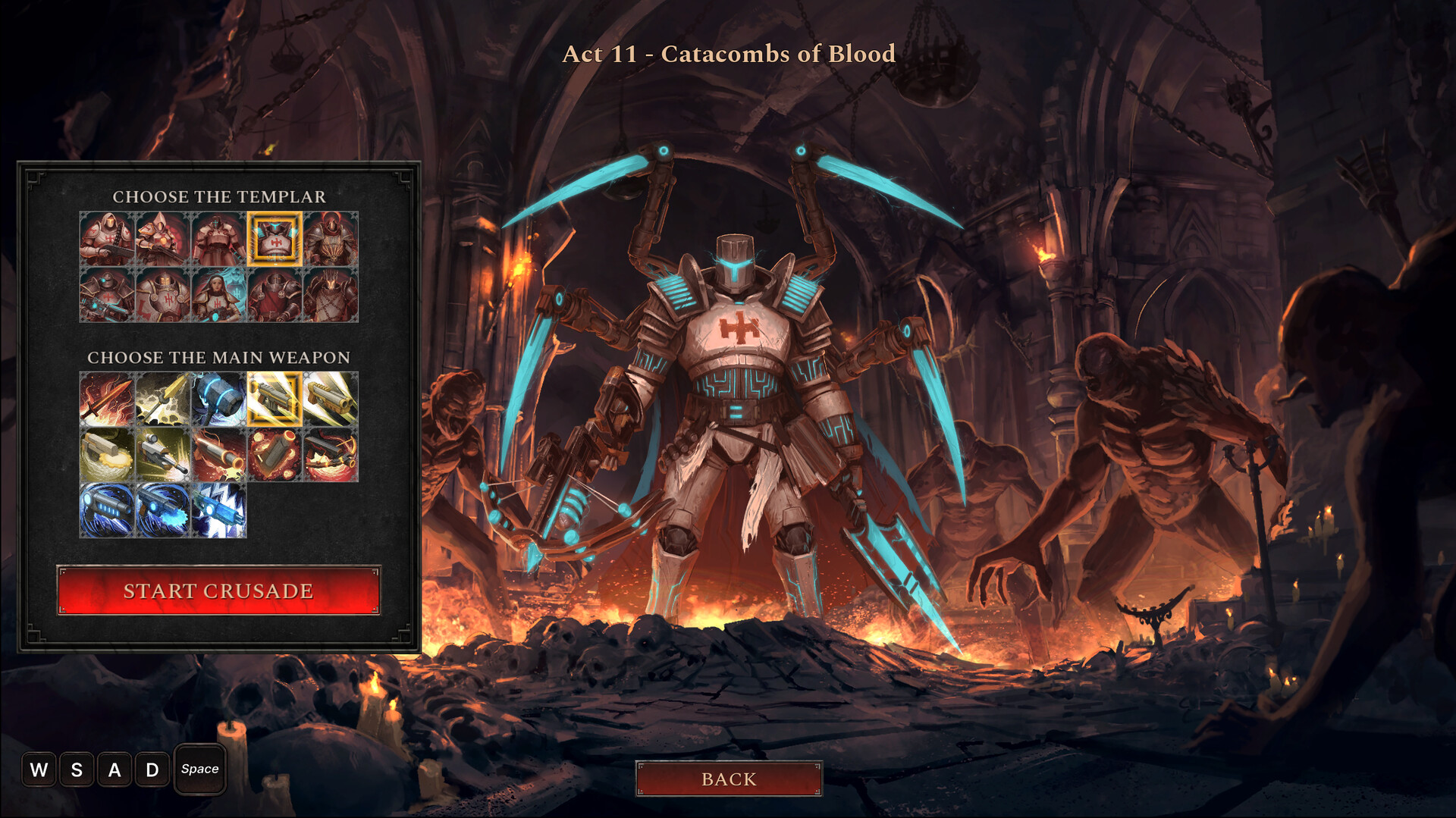
Dark Jay Studio packed 10 characters into this thing. Each has a different active ability, skill tree, and Divine Form — a screen-clearing transformation that charges during combat. The character with the defensive Divine Form is the safest choice for learning: you get damage reduction and the panic button charges faster when you're taking hits, which you will be.
The AoE character with a screen-wide Divine Form is probably the strongest overall for progression. You clear waves faster, which means more XP, more blessings, and a snowball effect that carries into late game. I switched to this one around hour 10 and immediately started reaching the deeper levels consistently.
One thing I noticed: the glass cannon character has insane damage potential but you need near-perfect weapon drops to survive the early game. Every run with this character is either a 30-minute god run or a 5-minute death. No middle ground. If you like high variance gameplay, go for it. If you want consistency, pick someone tankier.
How Weapon Merging Works (The Tutorial Skips the Good Stuff)
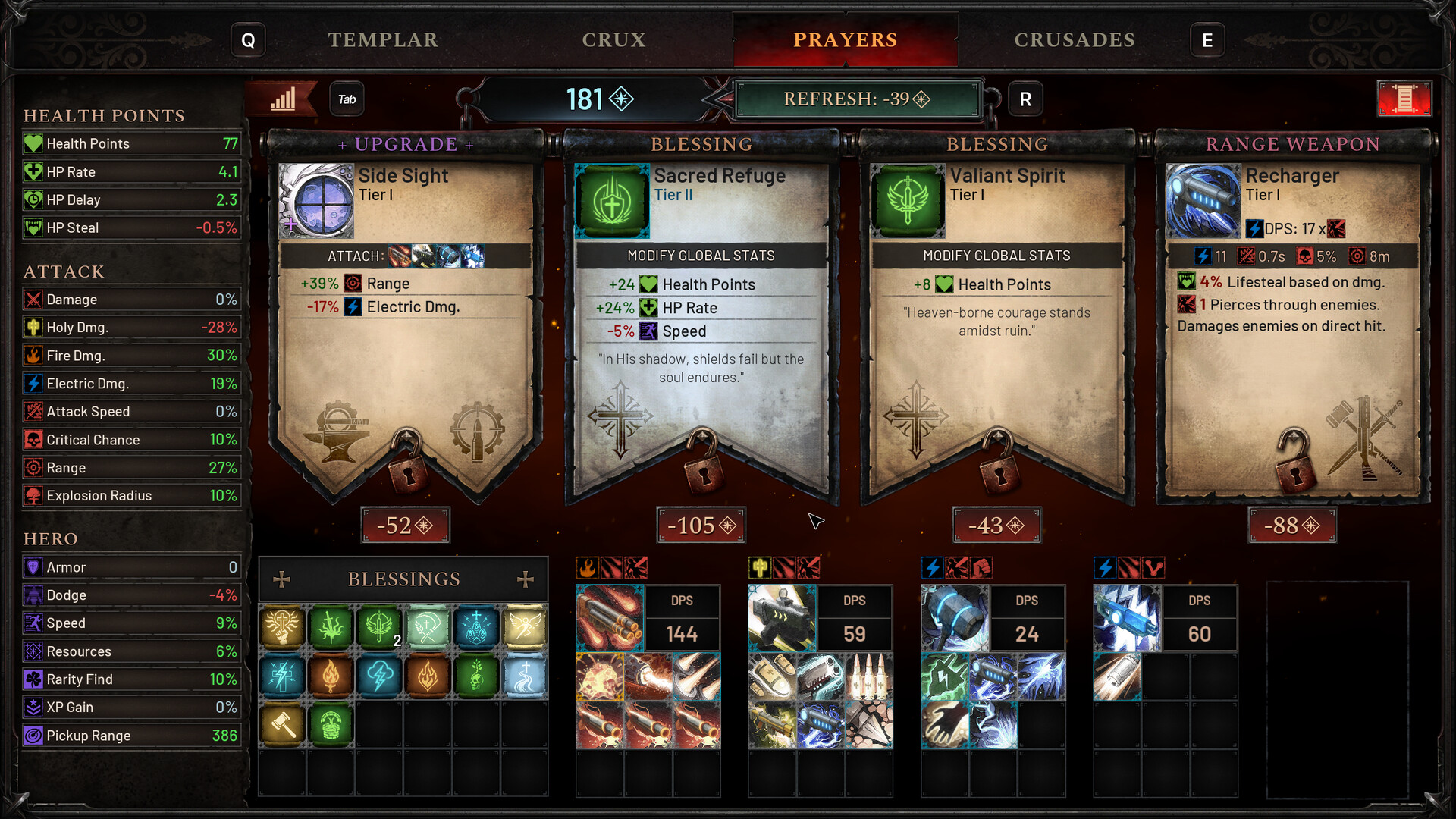
You carry 5 weapons at once and they all auto-fire. When you pick up a new weapon, you either equip it or merge it into an existing weapon. Merging sacrifices the donor weapon and transfers its stats to the target.
Here's what the game doesn't explain: merging weapons of the same element gives a hidden bonus. Fire into fire gets you extra projectiles. Lightning into lightning expands your chain range. I discovered this by accident around hour 20 and it completely changed how I approached runs.
Weapons have rarities — common, rare, epic, legendary. A legendary donor transfers more stats than a common donor, roughly 75% versus 60%. That gap widens with each merge. Your first merge should use whatever's available, but by merge number four and five, you really want legendary donors if you can find them.
Don't sleep on weapon rarity when deciding what to merge. The drops aren't completely random either. If you're holding mostly fire weapons, the game weights fire weapon drops higher. So you can somewhat steer your RNG by committing to an element early and filling your slots accordingly.
Cathedral Meta-Progression: Where to Spend Your Currency
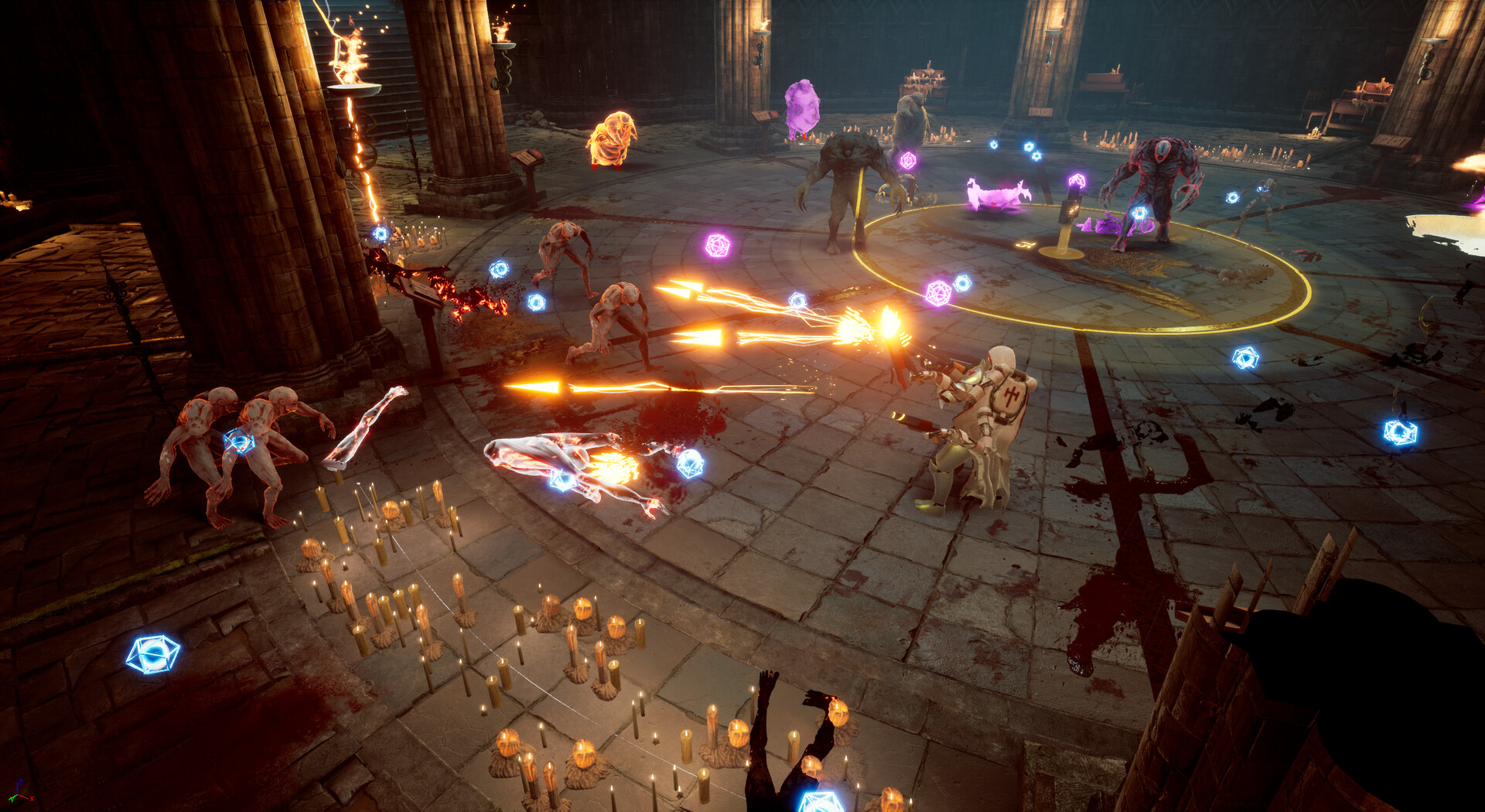
Between runs you're in the Cathedral hub with four stations. Training Ground gives permanent stat boosts. Armory unlocks weapon models for the drop pool. Alchemy Chamber upgrades your blessings. Bell Tower unlocks new characters.
The trap most beginners fall into is spreading currency evenly across all four. Don't. Max out Training Ground movespeed first. Not HP, not damage. Movespeed. Being faster than enemies means you get hit less. It's the most impactful stat in the game and it sounds boring on paper so people skip it.
HP second. Surviving one extra hit means you can make one extra mistake per fight. That's massive when a single death ends your run.
Damage third. You'll get plenty of damage from weapons and blessings during runs. Base damage helps but it's lower priority than survival stats.
I put about 15 hours worth of currency into the Training Ground before touching anything else. The difference is night and day. Runs that used to end at the mid-boss started reaching the final levels.
Aiming Modes: Pick Your Poison
Five aiming modes. Auto-aim is the default and works great on Steam Deck. Manual cursor aim gives higher DPS on priority targets because you can focus-fire. There's a hybrid mode and a Mouse Only accessibility mode that removes keyboard controls entirely.
On Steam Deck, auto-aim with the analog stick feels natural. On PC, I use manual aim for bosses and auto-aim for wave clear. You can swap mid-run through the pause menu, so don't feel locked in.
The Steam Deck itself runs the game at a locked 60fps with about 3-4 hours of battery life. The 16:10 screen gives you slightly more vertical visibility than a standard monitor, which means you see enemy waves a split second earlier. Minor advantage but it's real.
Your First Boss Fight
The first boss is a positioning check disguised as a DPS check. Its attacks come in telegraphed patterns — watch the boss model, not your character. Move perpendicular to its facing direction.
Bring at least one weapon with knockback or slow. Being able to control enemy movement matters way more than raw damage numbers during boss fights. I lost my first real attempt because I had five pure damage weapons and zero utility. Boss walked through my bullet wall and deleted me.
Position yourself vertically relative to the boss, meaning above or below it. Most hitboxes are wider than they are tall, so vertical positioning avoids more attacks. I stand below bosses whenever the arena allows it.
On Dying and Getting Better
You're going to die. The game expects this. Every death gives you Cathedral currency, so even your worst runs contribute to making your next run easier. That's the roguelite loop.
After each death, figure out what killed you. Positioning? You needed more speed or a knockback weapon. Damage output? Your merges weren't pulling their weight. Got cornered? You needed wider AoE coverage. Every death is feedback if you actually pay attention.
I died to the mid-boss four times before I realized I just needed one AoE weapon in my loadout. Changed nothing else. Cleared it immediately. Sometimes the fix is stupidly simple and you just need to step back and think instead of queuing another run.
Made by solo developer Dark Jay Studio, Arms of God is an Early Access roguelite bullet heaven with Doom-inspired visuals and metal soundtrack. 60 handcrafted levels, 60 weapons, and 10 characters — the depth-to-price ratio is absurd. If you like Vampire Survivors but want more build complexity and less idle gameplay, this is your next obsession.